
Senator John Heinz

RELATED NEWS

  • Beverly Wright is interviewed on NPR's "Living On Earth" go >>
  • August Wilson's boyhood home to become a workshop for artists, musicians and writers go >>
  • Dave Eggers one of the winners of the 31st annual American Book Awards go >>
  • Ashok Gadgil appointed Director of the Environmental Energy Technologies Division of Lawrence Berkeley National Laboratory go >>
  • Richard Lugar writes an Op-Ed for the New York Times on child nutrition programs go >>
  • Ann Hamilton creates new installation for the Pulitzer Foundation for the Arts go >>
  • Mark di Suvero exhibit opens at the Paula Cooper Gallery go >>
  • At 90, Russell Train and his environmental work is profiled on MSNBC go >>
  • Dave Eggers co-authors an Op-Ed piece on Sudan in the New York Times go >>
  • Heinz Awards Chairman Teresa Heinz co-authors editorial on cancer and green chemistry go >>
  • Dr. Butler, gerontologist and psychiatrist, the founding director of the National Institute on Aging, dies at 83 go >>
  • Jacques D'Amboise and the National Dance Institute to perform with young dancers in Shanghai via telepresence technology go >>
  • Andrew Grove writes an Op-Ed piece on job creation and unemployment in the United States go >>
  • James Nachtwey photographs from Iraq field hospitals part of photojournalism show at The Getty go >>
  • Inspired by Bernard Amadei, Israeli students start a Engineers Without Borders chapter and create a project in Nepal go >>
  • James Hansen is awarded the 2010 Sophie Prize go >>
  • James Hansen is co-recipient of the 2010 Blue Planet prize go >>
  • Robert Berkebile pens Op-Ed on energy and oil in Kansas City Star go >>
  • Arthur Mitchell named honorary chairman for 2010 USA International Ballet Competition go >>
  • Colorado Renewable Energy Society presents its 2010 Larson-Notari Award to Amory Lovins go >>
  • James Hansen co-authors paper stating that the global temperature this year reached the warmest average on record go >>
  • Arthur Mitchell's Dance Theater of Harlem honored at California African American Museum go >>
  • Dave Eggers and 826 Valencia links college bound students and donors with Scholar Match site go >>
  • Bernard Amadei inducted as an Ashoka Fellow go >>
  • Amory Lovins inducted as an Ashoka Fellow go >>
  • Jacques D'Amboise to perform for non-profit Kids Excel in El Paso fundraiser go >>
  • Paul Ehrlich interviewed by "Green" blog at New York Times go >>
  • Mario Molina named to IPCC review committee go >>
  • Leroy Hood is awarded the 2010 Kistler Prize from Foundation for the Future go >>
  • Lifetime achievement award presented to John Spengler by the EPA go >>
  • Dorothy Height, a leading female voice of the 1960s civil rights movement, dies at 98 go >>
  • President Obama nominates Donald Berwick to head the Centers for Medicare and Medicaid Services go >>
  • John Harbison and Michael Beattie prepare to hand over reins of Emmanuel Music go >>
  • John Harbison's double concerto world premiere completes the Boston Symphony Orchestra season go >>
  • Ashok Gadgil chosen by NASA as one of 10 Top Innovators on Water Sustainability go >>
  • Leroy Hood and the Institute for Systems Biology profiled in The Seattle Times go >>
  • Robert Berkebile's firm, BNIM, to lead master planning for Chatham University's campus in Gibsonia, PA go >>
  • Slate compares Steve Wozniak's design of the original Apple computer to today's iPad go >>
  • Richard Goldman named UC Berkeley Alumnus of the Year go >>
  • "August Wilson's Women" is staged at the Nuyorican Poets Cafe in New York City go >>
  • Scholar edits second volume of essays on August Wilson cycle of plays go >>
  • Ann Hamilton honored by University of Kansas with Alumni Distinguished Achievement Award go >>
  • Robert Moses co-authors a new book (with Ernesto Cortes) on creating a grassroots movement to transform public education go >>
  • Ernesto Cortes co-authors a new book (with Robert Moses) on creating a grassroots movement to transform public education go >>
  • Bernard Amadei leads development initiative in Haiti documented by Rocky Mountain PBS go >>
  • James Nachtwey's photography project on tuberculosis featured in the New York Times' Lens blog go >>
  • Leroy Hood co-authors paper in Science on the first whole genome sequencing of family of four go >>
  • Hugh Herr is profiled in The O&P Edge go >>
  • Hugh Herr is profiled in The Economist go >>
  • Dave Eggers makes Ad Age's Creativity magazine's 50 list for 2010 go >>
  • Bruce Katz is profiled in Next American City go >>
  • Chris Field and PG&E Chairman Peter Darbee release white paper on climate change for business leaders and policymakers go >>
  • Dave Eggers wins first Innovators Award from the LA TImes Book Awards go >>
  • James Nachtwey featured in exhibition on world events go >>
  • Beverly Wright interviewed about environmental justice on Living on Earth go >>
  • Jane Lubchenco announces National Climate Service at NOAA go >>
  • Heinz Awards Chairman Teresa Heinz urges women to get annual mammogram in Pittsburgh Post Gazette editorial go >>
  • Dee Boersma is featured on ABC Nightly News go >>
  • Paul Farmer interviewed on PBS NewsHour regarding delivery of aid in Haiti go >>
  • Jerry Franklin co-authors Op-Ed on how logging federal lands requires a fresh approach go >>
  • Paul Farmer interviewed on 60 Minutes regarding the crisis in Haiti go >>
  • Paul Farmer pens Op-Ed on Haiti in Miami Herald go >>
  • Dave Eggers among Poets and Writers magazine's "Fifty of the Most Inspiring Authors in the World" go >>
  • Jerry Franklin co-authors editorial in The Oregonian supporting Oregon forests bill go >>
  • Christopher Field co-authors study that links global warming to shifting ecosystems go >>
  • Peggy Shepard co-authors editorial in issue of Environmental Justice journal go >>
  • Hugh Herr and his prosthetics research are profiled in Forbes magazine go >>
  • Rick Lowe receives 2009 United States Artists Fellowship go >>
  • U.S. Senator Dick Lugar named one of the 25 greatest public servants over the past 25 years go >>
  • Bruce Katz co-authors article in The New Republic on revitalizing Detroit go >>
  • The new book, "Storms of My Grandchildren" by James Hansen, released today go >>
  • Geoffrey Canada and the Harlem Children's Zone profiled on 60 Minutes go >>
  • Brenda Krause Eheart receives a 2010 AARP Magazine Inspire Award go >>
  • John Holdren makes Foreign Policy's first annual list of 100 top global thinkers go >>
  • James Hansen makes Foreign Policy's first annual list of 100 top global thinkers go >>
  • Amory Lovins makes Foreign Policy's first annual list of 100 top global thinkers go >>
  • Paul Farmer makes Foreign Policy's first annual list of 100 top global thinkers go >>
  • Bernard Amadei is recipient of 2009 Honorary Member Award from the National Groundwater Association go >>
  • Chip Giller and grist.org profiled on Voice of America go >>
  • Kirk Smith co-authors a six paper series in The Lancet on the direct health benefits of reducing carbon dioxide and other greenhouse emissions go >>
  • Dee Boersma highlighted in Washington Post article on penguins' role as environmental indicators go >>
  • Joel Salatin is profiled in the Christian Science Monitor go >>
  • Aaron Beck presented with the Anna-Monika Prize for lifetime achievement go >>
  • Paul Farmer writes an Op-Ed on juvenile offenders for the Boston Globe go >>
  • Joel Salatin is a speaker at TEDx MidAtlantic go >>
  • The London Times writes about a new nanotechnology cancer therapy co-developed by Robert Langer go >>
  • Dave Eggers wins 2009 Prix Medicis for best foreign work go >>
  • Geoffrey Canada named 2010 winner of the Brock International Prize in Education go >>
  • Hugh Herr profiled in The Jerusalem Post go >>
  • Geoffrey Canada receives Robert Coles Award from Harvard group go >>

The Heinz Awards

2005

Sidney Drell

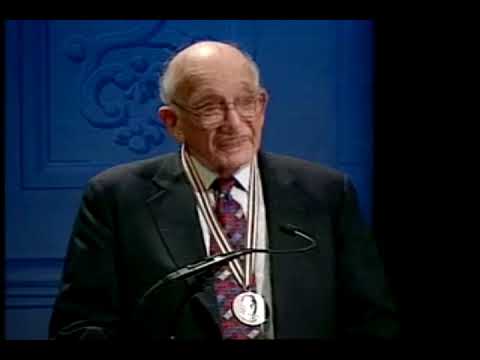
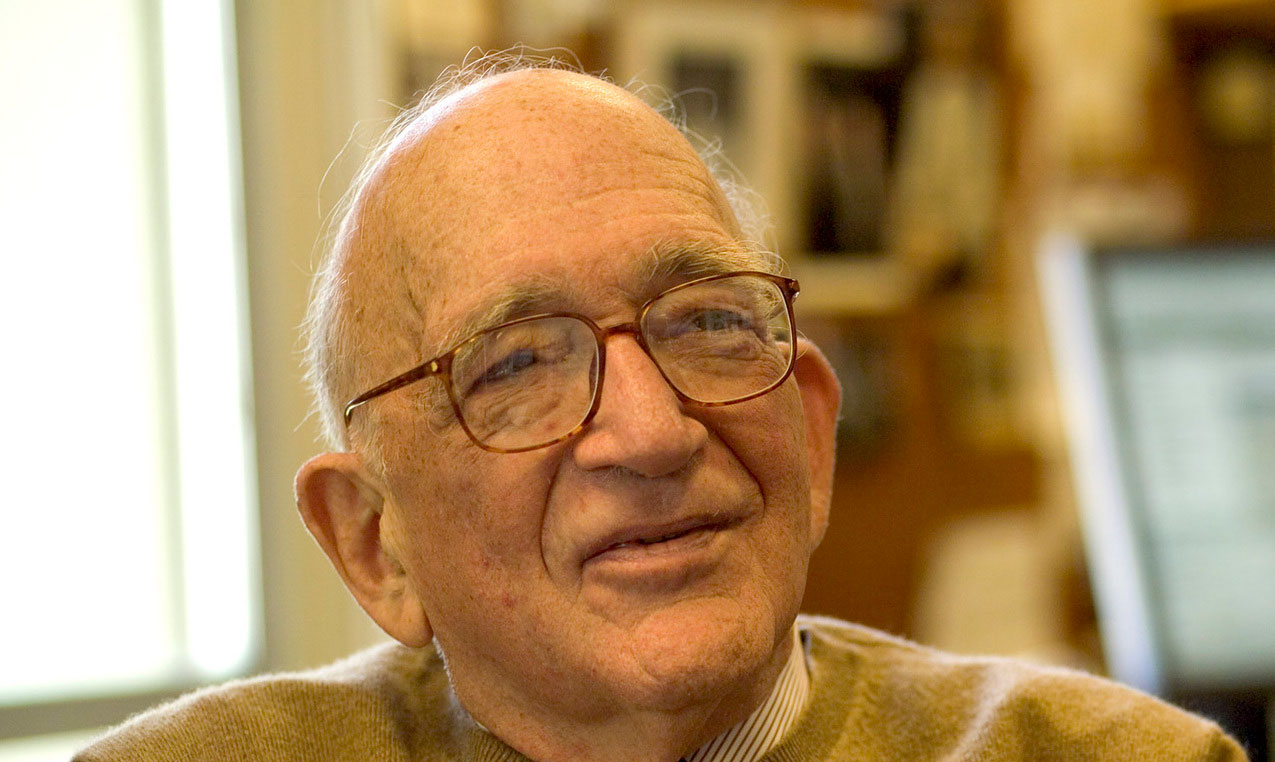
Sidney Drell receives the Heinz Award for Public Policy for his decades-long contributions toward reducing the threat of nuclear catastrophe while ensuring the nation's security and military pre-eminence.

A theoretical physicist, educator and authority in the arena of arms control, Dr. Drell has provided wise and firm counsel for more than 40 years. His tireless and effective leadership has helped advance the United States' efforts to reduce the danger and proliferation of nuclear weapons, without ever compromising the nation's defense.

In addition to his academic career at Stanford University doing pioneering research in elementary particle physics, Dr. Drell has been a ubiquitous presence in the debate over major defense issues. He has served on countless advisory panels to Congress, the U.S. Departments of Defense and Energy and the Central Intelligence Agency and is a member of an elite cadre of scientists who advise the government on technical and highly classified national security matters. He is currently a professor emeritus at the Stanford Linear Accelerator Center, having retired as its deputy director in 1998, and is a senior fellow at Stanford's Hoover Institution.

As a scientist, Dr. Drell's contributions through the years have been varied. He helped fix bugs in the nation's first reconnaissance satellite, Corona; helped develop verification methods for the world's first nuclear arms control treaty, and was a leading scientific critic of the ballistic missile defense system during the 1980s.

Dr. Drell is a founding and still-active member of JASON, a prestigious advisory panel of academic scientists on various issues related to national security. Ten years ago, when the nation was faced with the debate over whether weapons labs should be able to conduct underground nuclear weapons explosions in order to assure that the warheads were safe and reliable, he led a JASON study that concluded that nuclear testing was not necessary to assure the effectiveness and safety of weapons. Only last year, his intellectual arguments in opposing a new nuclear weapon (the so-called "bunker buster") helped provide the rationale for removing much of the proposed funding of the weapon from the omnibus budget bill.

In mentoring other scientists through the years, Dr. Drell has urged each of them to analyze the public policy implications of advances in their field of work. He has also mentored many scholars in public policy and arms control, and urged them to ground their policy work in underlying technical realities.

With unparalleled expertise and a steady, reasoned point of view, Dr. Sidney Drell has had a profound influence on American policymakers throughout the Cold War and beyond. His contributions have helped reduce the threat of nuclear calamity and have made the world a safer place in which to live.

Note: This profile is excerpted from the commemorative brochure published at the time of the awards' presentation.


UPDATES SINCE RECEIVING THE HEINZ AWARD

October 2008 - Sidney Drell inducted into American Academy of Arts and Sciences' 228th class of Fellows, an honor that celebrates cutting edge research and scholarship, artistic accomplishment and exemplary service to society. - American Academy of Arts and Sciences

April 2005 - Drell and Ambassador Goodby release a study that concerns the reality and necessity of the United States nuclear program. In the report, the men "calculated the actual nuclear needs of the U.S.," according to the administration's figures, which involves looking at and treating other countries as "potential enemy states". The study concludes that even with a cautious estimate, the U.S. nuclear arsenal is greater than it needs to be. - The Toronto Star

Speech

5/24/2005 - Acceptance Speech

Thank you, Teresa Heinz. For me this is a truly a tremendous honor. I am particularly honored when I consider the founding principles and the stated criteria for this award; and when I consider that this award celebrates the commitment and the record of the late Senator John Heinz as a fighter throughout his public career for principles of great importance to this nation and to the entire world - principles that are currently being advanced with intense commitment by Teresa Heinz, and with which I closely associate myself.

Fundamental science is a voyage through uncharted seas to unknown shores. But inevitably its advances spawn new technologies. They can be enormously beneficial for the human condition, and most have been. But they also have the potential for creating grave new dangers if misapplied. This presents societies with policy choices that are important and often very difficult.

I believe that the scientific community has an obligation to use its special insights to assist society to make wise choices in applying new technologies. This conviction led to my involvement in addressing profound public policy and national security implications of nuclear weapons, now that we must live or die with these monstrous creations. I loved my physics research, but I simply could not ignore the cold war nightmare of our civilization reduced to rubble by a conflict waged with nuclear bombs that are tens of millions of times more destructive than their predecessors.

The cold war has officially ended, but grave dangers remain. There still exists tens of thousands of nuclear weapons. Fear of an all out holocaust may have been sidelined at present, but a serious threat remains that these weapons, these most dangerous weapons, will be acquired by somehow by the most dangerous states or terrorists. Can, or will, we preserve a nonproliferation regime that over the past 60 years has succeeded in limiting the number of nuclear weapons nations to handful? That seems hardly possible if the United States insists it needs a new generation of nuclear weapons for whatever reasons - and to me they are not clear - while at the same time the other 186 treaty signatories are told they don't need them and can't have them. And if the nonproliferation regime collapses, what will happen to the 60-year old norm of their non-use since Hiroshima and Nagasaki? We still face major challenges.

There is work for us to do - much. I am very pleased that my past efforts to reduce nuclear danger have been judged worthy of this award. And I can assure you that I will continue those efforts.

Thank you.
Sidney Drell
Sidney Drell