
Senator John Heinz

RELATED NEWS

  • Mary Good and her career in chemistry is profiled in a short film by the Chemical Heritage Foundation go >>
  • Jay Keasling to receive 2013 George Washington Carver Award for innovation in industrial biotechnology go >>
  • Jay Keasling and his current work on artemisinin profiled in San Francisco Business Times go >>
  • Joint BioEnergy Institute, headed by Jay Keasling, to be renewed until 2018 go >>
  • The Nuclear Threat Initiative, with Sam Nunn and Richard Lugar, proposes new strategy to reduce conflict and to encourage security go >>
  • Robert Langer pens a piece for Project Syndicate on Going Against Conventional Wisdom go >>
  • Robert Langer is interviewed on NPR’s Science Friday go >>
  • C. Everett Koop, former surgeon general, has died at age 96 go >>
  • Marian Wright Edelman to receive Harvard Graduate School of Education's Medal for Education Impact go >>
  • Susan Seacrest is profiled by the Lincoln Star Journal go >>
  • Jay Keasling's semi-synthetic anti-malarial artemisinin now being produced in bulk and ready for introduction go >>
  • Hugh Herr speaks on cutting edge bionics at the Digital-Life-Design Conference go >>
  • Jay Keasling is profiled on CNN's The Next List go >>
  • Sidney Drell receives the National Medal of Science go >>
  • Philosopher Anthony Grayling interviews Robert Langer on the BBC's "Exchanges on the Frontier" go >>
  • Robert Langer to receive Israel's 2013 Wolf Prize for innovations that "have had a profound impact on medicine" go >>
  • Mildred Dresselhaus interviewed on The Age of Reason on the BBC World Service go >>
  • Leroy Hood to receive the National Medal of Science go >>
  • Robert Langer to receive the National Medal of Technology and Innovation go >>
  • Leroy Hood and his vision of P4 medicine is profiled by The National go >>
  • The New York Times reviews Ann Hamilton’s installation, “the event of a thread,” at the Park Avenue Armory go >>
  • Robert Langer's MIT lab's success in technology transfer is profiled in the New York Times go >>
  • James Balog is profiled on NPR's Weekend Edition go >>
  • Bernard Amadei appointed as Science Envoy for the U.S. State Department go >>
  • The Harvard Crimson writes about Robert Langer and a 'cyborg tissue' breakthrough at MIT and Harvard go >>
  • PandoDaily writes about "The Return of Dean Kamen" and the buzz surrounding his Stirling Engine go >>
  • Dean Kamen and his work is profiled by A Total Disruption, a project by Ondi Timoner go >>
  • James Balog interviewed in Fast Company on tracing the global decay of glaciers go >>
  • Janine Benyus is interviewed for TrimTab online magazine go >>
  • Robert Berkebile is interviewed by the Omega Institute for their Design by Nature Conference go >>
  • The Washington Post cites the work of Richard Feely and Joan Kleypas on the impact of ocean acidification on fisheries go >>
  • Dudley Cocke makes the case for rural theater in Howlround go >>
  • Dean Kamen interviewed on Charlie Rose on working with Coca-Cola on water issues go >>
  • Paul Farmer co-authors article "Cholera and the Road to Modernity" in America's Quarterly go >>
  • Tom "Smitty" Smith pens OpEd requesting Texas PUC to embrace energy alternatives go >>
  • Richard Jackson is interviewed on Living On Earth go >>
  • Russell Train, renowned conservationist and recipient of the 7th Heinz Award Chairman's Medal, dies at 92 go >>
  • Lou Bellamy to direct August Wilson's play, "Fences," at the Denver Center Theatre Company go >>
  • Hugh Herr believes that bionics can put people with disabiities back to work go >>
  • Elizabeth Kolbert reports from the Andes in Yale's Environment 360 go >>
  • di Suvero sculpture settles into new home at Stanford University go >>
  • NPR reports on Joseph DeRisi's work on a link between deadly Ebola virus and disease that's been killing boa constrictors go >>
  • New study by James Hansen ties recent heat waves to global warming go >>
  • James Hansen pens an Op-Ed piece on climate change for The Washington Post go >>
  • Mildred Dresselhaus profiled in U.S. News and World Report go >>
  • Prized Science's first episode of 2012 highlights the work of Robert Langer go >>
  • Mildred Dresselhaus is interviewed in The New York Times go >>
  • Hugh Herr is profiled on Jothy Rosenberg's "Who Says I Can't" go >>
  • Dave Egger's latest novel, A Hologram for the King, is reviewed in The New York Times go >>
  • Mildred Dresselhaus is the 2012 recipient of the Kavli Prize for Nanoscience go >>
  • Robert Langer to receive the 2012 Society of Chemical Industry's Perkin Medal go >>
  • Paul Anastas to receive the German Chemical Society’s Wohler Prize go >>
  • Pittsburgh Symphony Orchestra offers videos of Mason Bates discussing his go >>
  • Janine Benyus is named the 2012 Design Mind Award recipient by the Cooper-Hewitt Design Museum go >>
  • Andrew Grove is interviewed with Gordon Moore for NPR's Mornng Edition on their place in Silicon Valley history go >>
  • CNN's "The Next List" profiles Dr. Hugh Herr and his Biomechatronics Group at the MIT Media Lab go >>
  • Robert Langer's entrepreneurial drive is profiled in Chemical and Engineering News go >>
  • Hugh Herr and his bionics are profiled for TechWeekEurope go >>
  • Dean Kamen joins Elon Musk and Craig Venter to discuss energy innovation at ECOnomics Conference go >>
  • Kirk Smith shares the 2012 Tyler Prize for Environmental Achievement from USC go >>
  • Ruth Patrick, "Den Mother of Ecology", is profiled by the Intelligencer Journal go >>
  • Ralph Gomory co-authors op-ed in Bloomberg News on transparency for corporate money in political campaigns go >>
  • Carol Gilligan looks back on her 1982 book, In a Different Voice, in the current issue of Harvard's online journal Classics@ go >>
  • Jane Lubchenco is named Woman of the Year by the Women's Council on Energy and the Environment go >>
  • Bruce Katz is interviewed in Wired magazine on optimizing economic structures for revitalization go >>
  • Cary Fowler interviewed in The Atlantic on the importance of crop diversity and the vital role of the Svalbard Global Seed Vault go >>
  • New paper from Brookings’ Bruce Katz on "Remaking Federalism to Remake the American Economy" go >>
  • Mario Molina co-authors editorial piece on "How to cut climate change in half" go >>
  • Rita Dove is awarded the 2011 National Medal of Arts go >>
  • James Nachtwey honored with 3rd Dresden International Peace Prize go >>
  • Paul Anastas is profiled in Forbes go >>
  • Paul Farmer writes editorial in the New York Times on why the global fund matters go >>
  • Marian Wright Edelman on the need for dedicated support and education opportunities to allow access to the American Dream go >>
  • The Scripps Center for Marine Biodiversity and Conservation, founded by Nancy Knowlton, celebrates its first decade go >>
  • Geoffrey Canada to receive the second Harvard Graduate School of Education Medal for Education Impact go >>
  • Chasing Ice, on James Balog's Extreme Ice Survey, is one of the most-sought tickets at Sundance Film Festival go >>
  • Paul Farmer talks to CBS about new state-of-the-art hospital in Haiti go >>
  • Marian Wright Edelman is interviewed on public television's One On One. go >>
  • Environmental reporter Jane Kay interviews Paul Anastas on his move from EPA back to academia go >>
  • Ashok Gadgil is awarded the Zayed Future Energy Prize’s Lifetime Achievement Award go >>
  • Ian Cheney's new film, "The City Dark," reviewed on the Huffington Post go >>
  • Marian Wright Edelman reflects on Martin Luther King, Jr.’s words in Huffington Post column go >>
  • Mildred Dresselhaus is awarded the Enrico Fermi Award by President Obama go >>
  • Daniel Sperling interviewed about CAFE, the new federal fuel-efficiency standards go >>
  • Paul Anastas to depart postion heading EPA's research to return to Yale University in February go >>
  • Curt Ellis and FoodCorps profiled in Associated Press video go >>
  • Dean Kamen writes about 20 years of FIRST at the Huffington Post go >>
  • Elizabeth Kolbert is interviewed on Treehugger Radio go >>
  • The Boston Globe writes about the genesis of John Harbison's new Sixth Symphony, commissioned by the Boston Symphony Orchestra go >>
  • Mercury News profiles Ashok Gadgil's Darfur Stoves Project go >>

The Heinz Awards

2008

Robert Greenstein

Robert Greenstein receives the Heinz Award in Public Policy for his sometimes solitary voice advocating for America's low-income families.

As the founding Executive Director of the non-partisan Center on Budget and Policy Priorities, Robert Greenstein is a universally respected advocate for the nation's low- and moderate-income families in matters related to the federal budget. A former federal administrator, he has earned a reputation as a strong, honest and highly effective voice on behalf of many Americans whose voice in Washington is often muted within the corridors of power.

As the founder of the Washington, D.C.-based Center, which analyzes the impact of federal and state budget and tax initiatives on the country's low- and moderate-income people, Mr. Greenstein has served as a thoughtful and persuasive advocate. Respected on both sides of the political aisle, he is widely viewed as an unbiased, authoritative expert on a range of fiscal policy and poverty issues, and his work has helped improve the economic outlook of millions of America's poorer citizens.

Before creating the center in 1981, Mr. Greenstein served as administrator of the Food and Nutrition Service within the U.S. Department of Agriculture, where he oversaw the Food Stamp program, the Women, Infants and Children (WIC) program and the school lunch and other child nutrition programs.

Named by National Journal as one of the "most influential people affecting policy," Mr. Greenstein has played a significant role in a broad array of federal initiatives. Among his signature accomplishments, he helped over two decades to significantly expand the Earned Income Tax Credit (EITC) for low-income working families - which increasingly lifts more children out of poverty than any other federal program - while organizing (through the center) a national effort to ensure that eligible families know about the credit and apply for it.

The center's work extends far beyond Washington. It works extensively on fiscal policy and poverty issues on the state level, and it helps non-profit groups in developing countries and new democracies promote open debates on budget priorities, especially a budget's impact on the poor. The 2007 book, Forces for Good, listed the center as one of the 12 "most successful non-profits founded in recent U.S. history."

For close to three decades, Robert Greenstein has been holding the federal government accountable for decisions that affect our nation's low-income families and has earned a reputation among both parties as an honest, objective, thorough and credible source of information, particularly within a polarized political climate. Through his Center on Budget and Policy Priorities, he has established nothing less than a fourth branch of government, one that is invaluable to ensuring that the interests of all Americans are protected.

Note: This profile is excerpted from the commemorative brochure published at the time of the awards' presentation.


UPDATES SINCE RECEIVING THE HEINZ AWARD

May 2010 - The 2010 Daniel Patrick Moynihan Prize was presented to Robert Greenstein, Founder and Executive Director of the Center for Budget and Policy Priorities (CBPP), at a dinner ceremony at the Newseum in Washington, DC, on May 13, 2010. The $20,000 prize was created by the American Academy of Political and Social Science to recognize civic leaders who champion the use of evidence and informed judgment in the policy process. - American Society for Political and Social Science

Speech

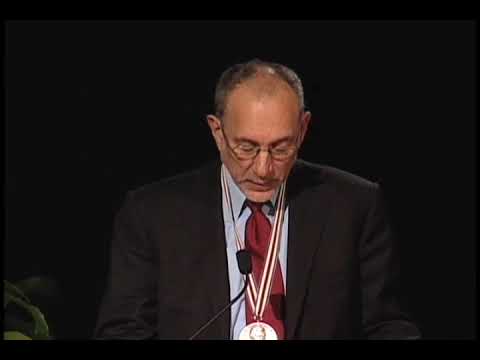
10/21/2008 - Acceptance Speech

Thank you all very much.  Thank you, in particular, Teresa Heinz and the Heinz Family Foundation.  I am deeply honored and moved.

I owe a great debt of gratitude to many people who guided me and helped me along the way; and most of all to my extraordinary colleagues at the Center on Budget and Policy Priorities, a number of whom you saw in that film.  What the film itself can’t capture is that these people are a brilliant and exceedingly dedicated group of individuals, who work extremely hard every day to fashion and improve public policies to reduce poverty and inequality and to foster fiscal responsibility for the sake of future generations.  I have the great privilege of directing this amazing group of people who consistently make me look better than I really am.

Unfortunately, as we gather here today, we have a wonderful time celebrating these awards today; but as everyone in the room knows, we face multiple, serious crises as a nation.  We have a presidential election in a couple of weeks and whoever wins is going to face probably the toughest set of problems, of any president taking office, since FDR took office in 1933.  A world financial crisis; what’s likely to be the deepest recession in at least a quarter-century; record deficits and debt; levels of poverty, unusual for a Western industrialized nation and particularly shocking for the richest nation in world history; probably the widest inequality in this country since 1929; 46 million people without health insurance and that figure is from last year before the recession started and the number’s now climbing.  And, last but certainly not least, in fact should probably head the list: global warming.

We’re very much going to need to address these problems effectively.  And to do that, we need to do it in ways that take into account the needs of the less fortunate and the less powerful both at home and abroad.  How to get there from here, well we’re going to need wise, strong, courageous leaders who rise above ideology and work in a bipartisan way.  And that’s what makes this award, so special to me.  It’s established to honor the memory of just such a leader, Senator John Heinz.  Looking at these problems that come ahead, we really miss him.  To navigate the very rough seas that lie ahead for our nation, we’re badly going to need leaders like him more than ever.

Thank you again.  I greatly appreciate this honor.

Robert Greenstein
Robert Greenstein