
Senator John Heinz

RELATED NEWS

  • Janine Benyus to share the 2013 Gothenburg Award for Sustainable Development go >>
  • Mary Good and her career in chemistry is profiled in a short film by the Chemical Heritage Foundation go >>
  • Jay Keasling to receive 2013 George Washington Carver Award for innovation in industrial biotechnology go >>
  • Jay Keasling and his current work on artemisinin profiled in San Francisco Business Times go >>
  • Joint BioEnergy Institute, headed by Jay Keasling, to be renewed until 2018 go >>
  • The Nuclear Threat Initiative, with Sam Nunn and Richard Lugar, proposes new strategy to reduce conflict and to encourage security go >>
  • Robert Langer pens a piece for Project Syndicate on Going Against Conventional Wisdom go >>
  • Robert Langer is interviewed on NPR’s Science Friday go >>
  • C. Everett Koop, former surgeon general, has died at age 96 go >>
  • Marian Wright Edelman to receive Harvard Graduate School of Education's Medal for Education Impact go >>
  • Susan Seacrest is profiled by the Lincoln Star Journal go >>
  • Jay Keasling's semi-synthetic anti-malarial artemisinin now being produced in bulk and ready for introduction go >>
  • Hugh Herr speaks on cutting edge bionics at the Digital-Life-Design Conference go >>
  • Jay Keasling is profiled on CNN's The Next List go >>
  • Sidney Drell receives the National Medal of Science go >>
  • Philosopher Anthony Grayling interviews Robert Langer on the BBC's "Exchanges on the Frontier" go >>
  • Robert Langer to receive Israel's 2013 Wolf Prize for innovations that "have had a profound impact on medicine" go >>
  • Mildred Dresselhaus interviewed on The Age of Reason on the BBC World Service go >>
  • Leroy Hood to receive the National Medal of Science go >>
  • Robert Langer to receive the National Medal of Technology and Innovation go >>
  • Leroy Hood and his vision of P4 medicine is profiled by The National go >>
  • The New York Times reviews Ann Hamilton’s installation, “the event of a thread,” at the Park Avenue Armory go >>
  • Robert Langer's MIT lab's success in technology transfer is profiled in the New York Times go >>
  • James Balog is profiled on NPR's Weekend Edition go >>
  • Bernard Amadei appointed as Science Envoy for the U.S. State Department go >>
  • The Harvard Crimson writes about Robert Langer and a 'cyborg tissue' breakthrough at MIT and Harvard go >>
  • PandoDaily writes about "The Return of Dean Kamen" and the buzz surrounding his Stirling Engine go >>
  • Dean Kamen and his work is profiled by A Total Disruption, a project by Ondi Timoner go >>
  • James Balog interviewed in Fast Company on tracing the global decay of glaciers go >>
  • Janine Benyus is interviewed for TrimTab online magazine go >>
  • Robert Berkebile is interviewed by the Omega Institute for their Design by Nature Conference go >>
  • The Washington Post cites the work of Richard Feely and Joan Kleypas on the impact of ocean acidification on fisheries go >>
  • Dudley Cocke makes the case for rural theater in Howlround go >>
  • Dean Kamen interviewed on Charlie Rose on working with Coca-Cola on water issues go >>
  • Paul Farmer co-authors article "Cholera and the Road to Modernity" in America's Quarterly go >>
  • Tom "Smitty" Smith pens OpEd requesting Texas PUC to embrace energy alternatives go >>
  • Richard Jackson is interviewed on Living On Earth go >>
  • Russell Train, renowned conservationist and recipient of the 7th Heinz Award Chairman's Medal, dies at 92 go >>
  • Lou Bellamy to direct August Wilson's play, "Fences," at the Denver Center Theatre Company go >>
  • Hugh Herr believes that bionics can put people with disabiities back to work go >>
  • Elizabeth Kolbert reports from the Andes in Yale's Environment 360 go >>
  • di Suvero sculpture settles into new home at Stanford University go >>
  • NPR reports on Joseph DeRisi's work on a link between deadly Ebola virus and disease that's been killing boa constrictors go >>
  • New study by James Hansen ties recent heat waves to global warming go >>
  • James Hansen pens an Op-Ed piece on climate change for The Washington Post go >>
  • Mildred Dresselhaus profiled in U.S. News and World Report go >>
  • Prized Science's first episode of 2012 highlights the work of Robert Langer go >>
  • Mildred Dresselhaus is interviewed in The New York Times go >>
  • Hugh Herr is profiled on Jothy Rosenberg's "Who Says I Can't" go >>
  • Dave Egger's latest novel, A Hologram for the King, is reviewed in The New York Times go >>
  • Mildred Dresselhaus is the 2012 recipient of the Kavli Prize for Nanoscience go >>
  • Robert Langer to receive the 2012 Society of Chemical Industry's Perkin Medal go >>
  • Paul Anastas to receive the German Chemical Society’s Wohler Prize go >>
  • Pittsburgh Symphony Orchestra offers videos of Mason Bates discussing his go >>
  • Janine Benyus is named the 2012 Design Mind Award recipient by the Cooper-Hewitt Design Museum go >>
  • Andrew Grove is interviewed with Gordon Moore for NPR's Mornng Edition on their place in Silicon Valley history go >>
  • CNN's "The Next List" profiles Dr. Hugh Herr and his Biomechatronics Group at the MIT Media Lab go >>
  • Robert Langer's entrepreneurial drive is profiled in Chemical and Engineering News go >>
  • Hugh Herr and his bionics are profiled for TechWeekEurope go >>
  • Dean Kamen joins Elon Musk and Craig Venter to discuss energy innovation at ECOnomics Conference go >>
  • Kirk Smith shares the 2012 Tyler Prize for Environmental Achievement from USC go >>
  • Ruth Patrick, "Den Mother of Ecology", is profiled by the Intelligencer Journal go >>
  • Ralph Gomory co-authors op-ed in Bloomberg News on transparency for corporate money in political campaigns go >>
  • Carol Gilligan looks back on her 1982 book, In a Different Voice, in the current issue of Harvard's online journal Classics@ go >>
  • Jane Lubchenco is named Woman of the Year by the Women's Council on Energy and the Environment go >>
  • Bruce Katz is interviewed in Wired magazine on optimizing economic structures for revitalization go >>
  • Cary Fowler interviewed in The Atlantic on the importance of crop diversity and the vital role of the Svalbard Global Seed Vault go >>
  • New paper from Brookings’ Bruce Katz on "Remaking Federalism to Remake the American Economy" go >>
  • Mario Molina co-authors editorial piece on "How to cut climate change in half" go >>
  • Rita Dove is awarded the 2011 National Medal of Arts go >>
  • James Nachtwey honored with 3rd Dresden International Peace Prize go >>
  • Paul Anastas is profiled in Forbes go >>
  • Paul Farmer writes editorial in the New York Times on why the global fund matters go >>
  • Marian Wright Edelman on the need for dedicated support and education opportunities to allow access to the American Dream go >>
  • The Scripps Center for Marine Biodiversity and Conservation, founded by Nancy Knowlton, celebrates its first decade go >>
  • Geoffrey Canada to receive the second Harvard Graduate School of Education Medal for Education Impact go >>
  • Chasing Ice, on James Balog's Extreme Ice Survey, is one of the most-sought tickets at Sundance Film Festival go >>
  • Paul Farmer talks to CBS about new state-of-the-art hospital in Haiti go >>
  • Marian Wright Edelman is interviewed on public television's One On One. go >>
  • Environmental reporter Jane Kay interviews Paul Anastas on his move from EPA back to academia go >>
  • Ashok Gadgil is awarded the Zayed Future Energy Prize’s Lifetime Achievement Award go >>
  • Ian Cheney's new film, "The City Dark," reviewed on the Huffington Post go >>
  • Marian Wright Edelman reflects on Martin Luther King, Jr.’s words in Huffington Post column go >>
  • Mildred Dresselhaus is awarded the Enrico Fermi Award by President Obama go >>
  • Daniel Sperling interviewed about CAFE, the new federal fuel-efficiency standards go >>
  • Paul Anastas to depart postion heading EPA's research to return to Yale University in February go >>
  • Curt Ellis and FoodCorps profiled in Associated Press video go >>
  • Dean Kamen writes about 20 years of FIRST at the Huffington Post go >>
  • Elizabeth Kolbert is interviewed on Treehugger Radio go >>
  • The Boston Globe writes about the genesis of John Harbison's new Sixth Symphony, commissioned by the Boston Symphony Orchestra go >>

The Heinz Awards

2006

Leroy Hood

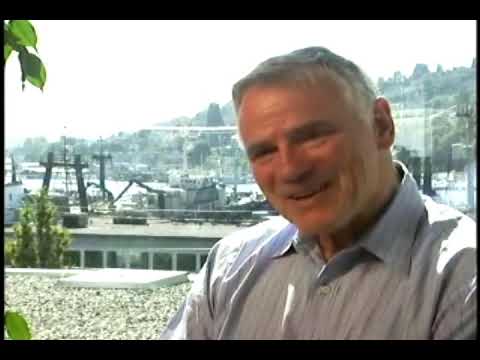
Dr. Leroy Hood receives the Heinz Award in Technology, the Economy and Employment for his extraordinary breakthroughs in biomedical science that have unlocked new fields of study and delivered life-saving products to the marketplace.

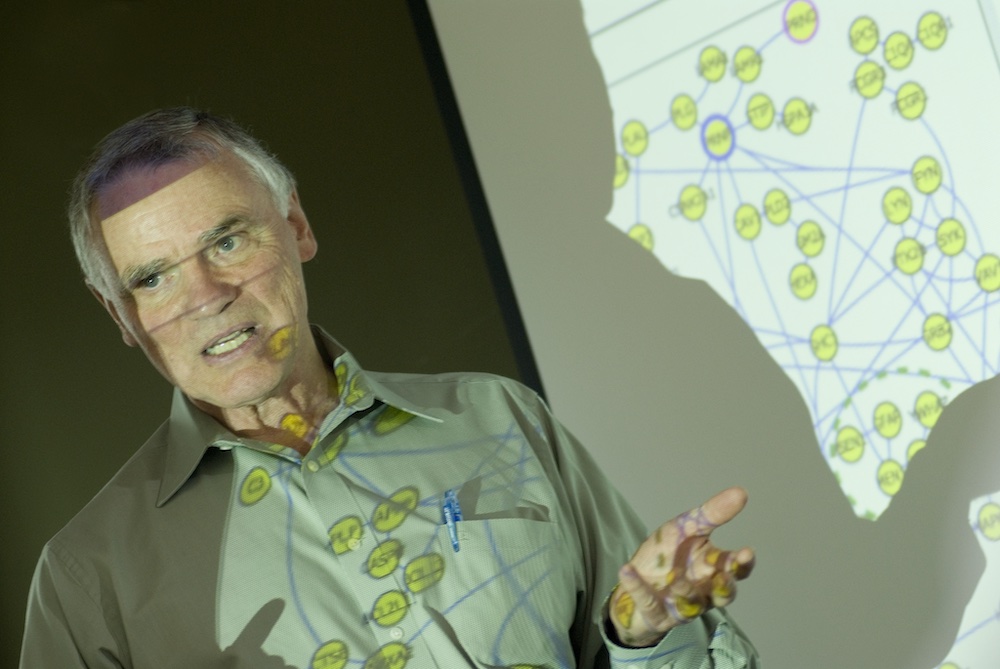
The owner of 14 breakthrough patents in the biomedical arena, including the DNA gene sequencer that laid the foundation for the Human Genome Project, Dr. Hood is the progenitor of the emerging field of study called "systems biology." He is the founder of 10 biotechnology companies, the inventor of an array of life-saving products and a visionary reformer in the teaching of the life sciences.

With an M.D. from Johns Hopkins and a Ph.D. in biochemistry from the California Institute of Technology (CalTech), Dr. Hood's early work in the 1960s focused on antibody diversity, immunology and myeloma proteins. He learned how to sequence proteins (i.e., determine the order of a gene's building blocks) and put forth a then-radical idea that antibody chains were actually encoded by two distinct genes one variable for recognizing foreign molecular patterns and one constant for killing the responses of antibody molecules. It was a theory that was met with initial skepticism within the scientific community, but it turned out to be the key to understanding how the body synthesizes diverse antibodies.

Dr. Hood joined the Public Health Service in 1967 and, as the senior investigator in the immunology branch of the National Cancer Institute, established the protein chemistry laboratory. Knowing that precise technology could lift barriers to the deciphering of important biological information, he developed a growing interest in the integration of biology and technology. Upon returning to CalTech in 1970, he created a protein sequencer that was 100 times more sensitive than its predecessors. This technology opened up new areas in biology, including greater understanding of the causes of and treatments for certain cancers. Dr. Hood then went on to invent four additional instruments - each of which has had a major impact on biology and medicine.

The groundbreaking work in Dr. Hood's laboratory led to the onset of a new field called systems biology" the interplay among biology, technology and computation"and under-standing the properties of the human immune system became the center of his work during the late 1970s. His lab produced an array of commercial applications. He founded Applied Biosystems, a world leader in molecular instrumentation and, in 1992, founded the first cross-disciplinary biology department, Molecular Biotechnology, at the University of Washington.

A quiet yet insistent visionary, Dr. Leroy Hood's insights, wisdom and conviction have accelerated discovery and unlocked new fields of study resulting in life-saving products. His influence will be felt for many generations to come.

Note: This profile is excerpted from the commemorative brochure published at the time of the awards' presentation.


UPDATES SINCE RECEIVING THE HEINZ AWARD

December 2012 - Seattle biologist, Leroy Hood, will receive the National Medal of Science for his work on molecular immunology, biotechnology and genomics. - The Seattle Times

March 2011
- The California Institute of Technology has recognized Leroy Hood (’68) with the Distinguished Alumni Award, the highest honor regularly bestowed by the Institute. This award acknowledges a particular achievement, a series of achievements, or a career of achievements of noteworthy value. Since its inception in 1966, the award has been granted to outstanding alumni in the sciences, engineering, business, and the arts. - Caltech

January 2011 - Leroy Hood will receive the Fritz J. and Dolores H. Russ Prize — a $500,000 biennial award recognizing a bioengineering achievement that significantly improves the human condition — “for automating DNA sequencing that revolutionized biomedicine and forensic science.” - National Academy of Engineering

October 2007 - Leroy Hood was listed as one of "The 10 Hottest Nerds" in Newsweek and answered the question of where the biological sciences are headed in the future, making the point that biology will be the dominant science in the 21st century. Another transformation will be in single-cell analysis and the ability to read the biological information of the DNA, RNA and proteins inside a cell. - Newsweek

Speech

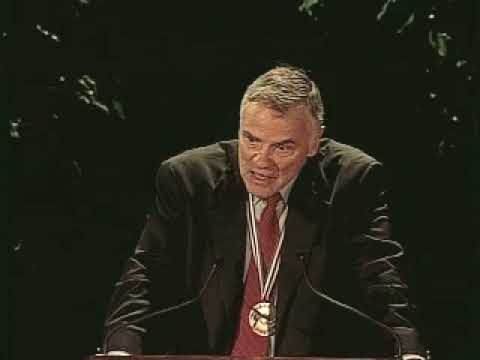
11/14/2006 - Acceptance Speech

Let me tell you about a dream I have for medicine in the future. And it's a dream where we can reach out to all citizens in the world. It's a dream where we can change fundamentally how we do medicine from its current reactive mode to a predictive, a preventive, a highly personalized, and even a participatory mode.

The systems biology that you heard about is transforming how we think about medicine in a holistic way. And that together with new technologies, nanotechnology and so forth is going to permit us within the next 10 years to have a medicine where each of you will have your genome sequence, and we can make predictions about what your future health history is. Where you will twice a year do simple blood measurements and from that we can predict what your current state of health is. Where we can use these systems approaches entirely new approaches to drugs that make them simpler and much more expedient in terms of their discovery. Where we can treat individuals for their individual uniqueness and where in time through this education and this new medicine individuals will be able to participate in their future health history.

This will challenge enormously the status quo. All of the health care industry will over a 10 or 15 year period have to rewrite their plans ... drug companies to discover drugs in more effective ways ... insurance companies to wonder just what they should do in this world of predictive medicine ... and even medical schools will have to learn to teach physicians that will be practicing a very different type of medicine.

What excites me most is that this will push us toward a digitalization of medicine just as we have seen in the past, the digitalization of information technologies and communication. And the implication is exactly the same. We will dramatically begin to reduce the cost of medicine to the point where we can deal with the 45 million uninsured in this country and ultimately to the point where we can export developed world medicine to the underdeveloped world. This will create a true democratization of health care and of medicine and I think will transform the opportunities we have for bringing a better kind of life to many of our citizens.

It is impossible to do this alone. I'd like to thank my wife. I'd like to thank my colleagues and students and especially I'd like to thank all of the many opportunities that I've had to think in new ways about new opportunities. And I think the Heinz Foundation in valuing people that can think out of the box makes a unique contribution to society.

Leroy Hood
Leroy Hood