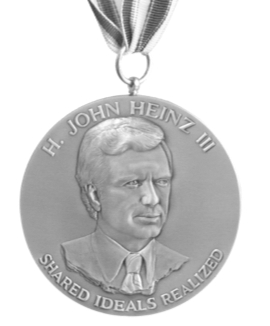

Senator John Heinz

RELATED NEWS

  • Beverly Wright is interviewed on NPR's "Living On Earth" go >>
  • August Wilson's boyhood home to become a workshop for artists, musicians and writers go >>
  • Dave Eggers one of the winners of the 31st annual American Book Awards go >>
  • Ashok Gadgil appointed Director of the Environmental Energy Technologies Division of Lawrence Berkeley National Laboratory go >>
  • Richard Lugar writes an Op-Ed for the New York Times on child nutrition programs go >>
  • Ann Hamilton creates new installation for the Pulitzer Foundation for the Arts go >>
  • Mark di Suvero exhibit opens at the Paula Cooper Gallery go >>
  • At 90, Russell Train and his environmental work is profiled on MSNBC go >>
  • Dave Eggers co-authors an Op-Ed piece on Sudan in the New York Times go >>
  • Heinz Awards Chairman Teresa Heinz co-authors editorial on cancer and green chemistry go >>
  • Dr. Butler, gerontologist and psychiatrist, the founding director of the National Institute on Aging, dies at 83 go >>
  • Jacques D'Amboise and the National Dance Institute to perform with young dancers in Shanghai via telepresence technology go >>
  • Andrew Grove writes an Op-Ed piece on job creation and unemployment in the United States go >>
  • James Nachtwey photographs from Iraq field hospitals part of photojournalism show at The Getty go >>
  • Inspired by Bernard Amadei, Israeli students start a Engineers Without Borders chapter and create a project in Nepal go >>
  • James Hansen is awarded the 2010 Sophie Prize go >>
  • James Hansen is co-recipient of the 2010 Blue Planet prize go >>
  • Robert Berkebile pens Op-Ed on energy and oil in Kansas City Star go >>
  • Arthur Mitchell named honorary chairman for 2010 USA International Ballet Competition go >>
  • Colorado Renewable Energy Society presents its 2010 Larson-Notari Award to Amory Lovins go >>
  • James Hansen co-authors paper stating that the global temperature this year reached the warmest average on record go >>
  • Arthur Mitchell's Dance Theater of Harlem honored at California African American Museum go >>
  • Dave Eggers and 826 Valencia links college bound students and donors with Scholar Match site go >>
  • Bernard Amadei inducted as an Ashoka Fellow go >>
  • Amory Lovins inducted as an Ashoka Fellow go >>
  • Jacques D'Amboise to perform for non-profit Kids Excel in El Paso fundraiser go >>
  • Paul Ehrlich interviewed by "Green" blog at New York Times go >>
  • Mario Molina named to IPCC review committee go >>
  • Leroy Hood is awarded the 2010 Kistler Prize from Foundation for the Future go >>
  • Lifetime achievement award presented to John Spengler by the EPA go >>
  • Dorothy Height, a leading female voice of the 1960s civil rights movement, dies at 98 go >>
  • President Obama nominates Donald Berwick to head the Centers for Medicare and Medicaid Services go >>
  • John Harbison and Michael Beattie prepare to hand over reins of Emmanuel Music go >>
  • John Harbison's double concerto world premiere completes the Boston Symphony Orchestra season go >>
  • Ashok Gadgil chosen by NASA as one of 10 Top Innovators on Water Sustainability go >>
  • Leroy Hood and the Institute for Systems Biology profiled in The Seattle Times go >>
  • Robert Berkebile's firm, BNIM, to lead master planning for Chatham University's campus in Gibsonia, PA go >>
  • Slate compares Steve Wozniak's design of the original Apple computer to today's iPad go >>
  • Richard Goldman named UC Berkeley Alumnus of the Year go >>
  • "August Wilson's Women" is staged at the Nuyorican Poets Cafe in New York City go >>
  • Scholar edits second volume of essays on August Wilson cycle of plays go >>
  • Ann Hamilton honored by University of Kansas with Alumni Distinguished Achievement Award go >>
  • Robert Moses co-authors a new book (with Ernesto Cortes) on creating a grassroots movement to transform public education go >>
  • Ernesto Cortes co-authors a new book (with Robert Moses) on creating a grassroots movement to transform public education go >>
  • Bernard Amadei leads development initiative in Haiti documented by Rocky Mountain PBS go >>
  • James Nachtwey's photography project on tuberculosis featured in the New York Times' Lens blog go >>
  • Leroy Hood co-authors paper in Science on the first whole genome sequencing of family of four go >>
  • Hugh Herr is profiled in The O&P Edge go >>
  • Hugh Herr is profiled in The Economist go >>
  • Dave Eggers makes Ad Age's Creativity magazine's 50 list for 2010 go >>
  • Bruce Katz is profiled in Next American City go >>
  • Chris Field and PG&E Chairman Peter Darbee release white paper on climate change for business leaders and policymakers go >>
  • Dave Eggers wins first Innovators Award from the LA TImes Book Awards go >>
  • James Nachtwey featured in exhibition on world events go >>
  • Beverly Wright interviewed about environmental justice on Living on Earth go >>
  • Jane Lubchenco announces National Climate Service at NOAA go >>
  • Heinz Awards Chairman Teresa Heinz urges women to get annual mammogram in Pittsburgh Post Gazette editorial go >>
  • Dee Boersma is featured on ABC Nightly News go >>
  • Paul Farmer interviewed on PBS NewsHour regarding delivery of aid in Haiti go >>
  • Jerry Franklin co-authors Op-Ed on how logging federal lands requires a fresh approach go >>
  • Paul Farmer interviewed on 60 Minutes regarding the crisis in Haiti go >>
  • Paul Farmer pens Op-Ed on Haiti in Miami Herald go >>
  • Dave Eggers among Poets and Writers magazine's "Fifty of the Most Inspiring Authors in the World" go >>
  • Jerry Franklin co-authors editorial in The Oregonian supporting Oregon forests bill go >>
  • Christopher Field co-authors study that links global warming to shifting ecosystems go >>
  • Peggy Shepard co-authors editorial in issue of Environmental Justice journal go >>
  • Hugh Herr and his prosthetics research are profiled in Forbes magazine go >>
  • Rick Lowe receives 2009 United States Artists Fellowship go >>
  • U.S. Senator Dick Lugar named one of the 25 greatest public servants over the past 25 years go >>
  • Bruce Katz co-authors article in The New Republic on revitalizing Detroit go >>
  • The new book, "Storms of My Grandchildren" by James Hansen, released today go >>
  • Geoffrey Canada and the Harlem Children's Zone profiled on 60 Minutes go >>
  • Brenda Krause Eheart receives a 2010 AARP Magazine Inspire Award go >>
  • John Holdren makes Foreign Policy's first annual list of 100 top global thinkers go >>
  • James Hansen makes Foreign Policy's first annual list of 100 top global thinkers go >>
  • Amory Lovins makes Foreign Policy's first annual list of 100 top global thinkers go >>
  • Paul Farmer makes Foreign Policy's first annual list of 100 top global thinkers go >>
  • Bernard Amadei is recipient of 2009 Honorary Member Award from the National Groundwater Association go >>
  • Chip Giller and grist.org profiled on Voice of America go >>
  • Kirk Smith co-authors a six paper series in The Lancet on the direct health benefits of reducing carbon dioxide and other greenhouse emissions go >>
  • Dee Boersma highlighted in Washington Post article on penguins' role as environmental indicators go >>
  • Joel Salatin is profiled in the Christian Science Monitor go >>
  • Aaron Beck presented with the Anna-Monika Prize for lifetime achievement go >>
  • Paul Farmer writes an Op-Ed on juvenile offenders for the Boston Globe go >>
  • Joel Salatin is a speaker at TEDx MidAtlantic go >>
  • The London Times writes about a new nanotechnology cancer therapy co-developed by Robert Langer go >>
  • Dave Eggers wins 2009 Prix Medicis for best foreign work go >>
  • Geoffrey Canada named 2010 winner of the Brock International Prize in Education go >>
  • Hugh Herr profiled in The Jerusalem Post go >>
  • Geoffrey Canada receives Robert Coles Award from Harvard group go >>

The Heinz Awards

2001

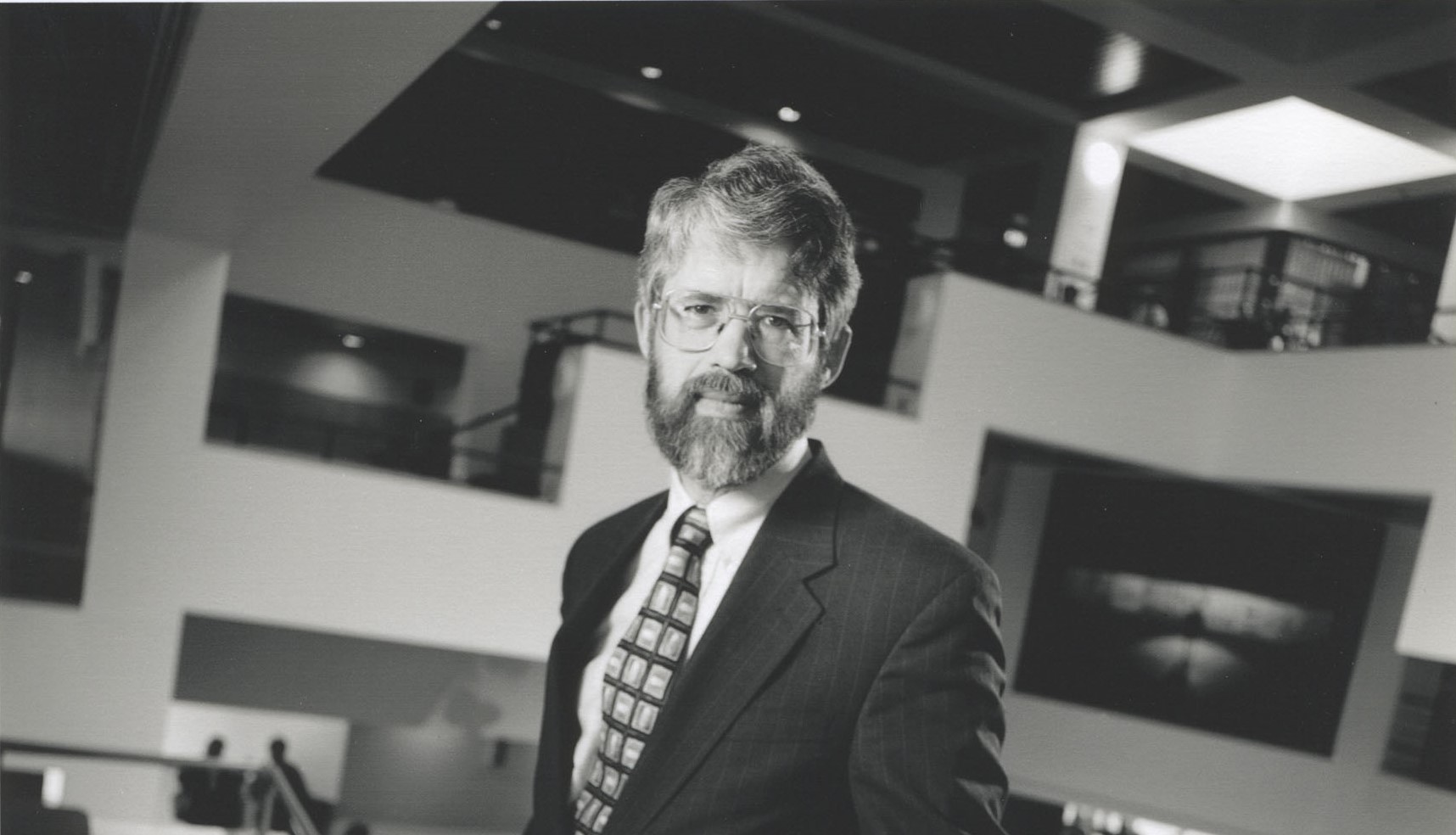
John Holdren

Dr. John Holdren receives the Heinz Award in Public Policy for his prodigious contributions to such complex issues as arms control, sustainable development and global energy resources. Dr. Holdren is that rare scholar who is also a born negotiator, one who is able to inspire colleagues and students to new heights of effort and understanding while possessing the ability to cut to the heart of a problem and offer new perspectives on which consensus can be based. Dr. Holdren's contributions to public policy are noteworthy, not simply because of their quality and scope, but also because they span a number of disciplines.

He is credited with playing a significant role in mobilizing the international community of policymakers and scientists to take action in the arms control area, where he has been a powerfully effective advocate of U.S. attention to the security of nuclear weapons and nuclear materials in Russia. He has been extremely active in the international policy dialogue regarding global environmental degradation and resource conservation.

He has served in a wide variety of advisory roles for policymakers in state, federal and international agencies since the early 1970s, and he became a member of President Clinton's Committee of Advisors on Science and Technology (PCAST) when it was formed in 1994. Dr. Holdren chaired the first study requested from PCAST, which led to a revision of U.S. policy on cooperation with Russia on nuclear materials protection. Also in the mid-1990s, he co-chaired the National Academy of Sciences' reshaping of U.S. policy on the management of this country's weapons-grade plutonium. And from 1995 into 1999, he chaired a series of PCAST studies on revising U.S. energy research strategy to more effectively address the challenges of the 21st century, including especially the challenge of global warming.

Dr. Holdren has been a member since 1973 of the Pugwash Conferences on Science and World Affairs, an international group of scholars and public figures who meet regularly to discuss ways to reduce the dangers from weapons of mass destruction and to build international cooperation on other common problems. He served as chair of the executive committee of the Pugwash Conferences from 1987 to 1997, and was chosen by his colleagues to give the acceptance speech when the organization shared the Nobel Peace Prize in 1995.

Dr. Holdren has been an extraordinarily effective and articulate leader in shaping public policy, not only through his various advisory roles to government but also indirectly, as an educator engaged in training the next generation of leaders in science and technology policy. He is currently at Harvard University, in both the Department of Earth and Planetary Sciences and the John F. Kennedy School of Government, which named him as its first Teresa and John Heinz Professor of Environmental Policy. Additionally, he serves as Visiting Distinguished Scientist at Woods Hole Research Center.

Dr. John Holdren has had a profound influence in international efforts to reduce the dangers of nuclear conflict, achieve solid cooperation in energy-technology innovation and shape new understanding and policies relating to a workable strategy to ensure sustainable development of the earth's resources. He has had an enormous impact on bringing the tools of science and technology to bear on the challenges of formulating public policy to cope with the economic, environmental and security challenges posed by the scientific and technological advances of the 20th Century.

Note: This profile is excerpted from the commemorative brochure published at the time of the awards' presentation.


UPDATES SINCE RECEIVING THE HEINZ AWARD

July 2006 - Holdren co-writes article with Alan Leshner stating that there is no doubt about the reality of climate change and that the United States, "as the largest emitter of carbon dioxide on the planet, needs to become a leader in developing and deploying serious solutions." - The San Francisco Chronicle

February 2006 - Holdren takes office as president of the American Association for the Advancement of Science.

June 2005 - Holdren becomes the second director of the Woods Hole Research Center. The organization, which focuses on environmental research with an emphasis on "preserving forested regions such as the Amazon River Basin in Brazil," was established in 1986 by George Woodwell, another Heinz Award recipient and the man who Holdren will succeed as director. - The Boston Globe

March 2005 - Holdren and the National Commission on Energy Policy, which he co-chairs, release a report that endorses the use of "biomass electricity and biofuels as a strategy to meet U.S. energy needs." The report, which was entitled Ending the Energy Stalemate: A Bipartisan Strategy to Meet America's Energy Challenges combines two years worth of research with conscious proposals for United States' energy future. - BioCycle

December 2004 - Holdren is elected to the office of president-elect of the American Association for the Advancement of Science (AAAS).

July 2003 - Holdren serves on a panel of researchers from the Massachusetts Institute of Technology that address the future of nuclear energy issue. The report concludes that "the nuclear option should be retained precisely because it is an important carbon-free source of power." - U.S. Newswire

February 2003 - Holdren co-chairs a panel with Nikolai Laveroc, of the Institute of Geology and Geophysics in Russia, which was called "to appoint a joint committee to develop a roadmap for submarine dismantling", that would focus on fuel conservation. The panel is also to serve as an example of strategic cooperation between Russia and the United States, hopefully serving other agendas like "nonproliferation, nuclear safety and environmental security." - Nuclear Waste News

Speech

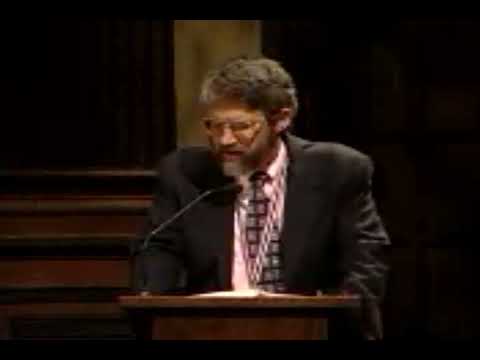
3/5/2001 - Acceptance Speech

Well, thank you very much, Teresa. One might wonder from the array of interests of mine that have just been mentioned, whether I simply have a short attention span, but I do like to think that there is some method in this madness. I think that many, if not most, of the great problems of the human predicament - population, resources, environment, prosperity, security - are not separate problems, but are intimately interconnected. And I believe if they're not all addressed and solved together, they won't be solved at all.

This insight was impressed on me first by a book called The Challenge of Man's Future. It was written in the early 1950's by the great geochemist and scientific statesman, Harrison Brown. I read that book as a sophomore in high school, and it launched me onto the career path that I've followed since. Its insight about the inter-connectedness of the human predicament was also understood by the late Senator John Heinz, whom I had the pleasure to know. And, it's understood by Teresa and embodied in the work of the Heinz Family Foundation and in the Heinz Awards.

One does not arrive, of course, at a podium such as this one, without a lot of help. I've been guided by marvelous mentors. I've been stimulated by superb students. I've been amplified by collaborations with an extraordinary collection of colleagues. None more important, I should say, than Paul and Anne Ehrlich, who received the first Heinz Award in Environment. Anne and their daughter, Lisa and her husband Tim, are all here tonight. I've been enabled by uncommonly flexible administrators. I've been supported by outstanding staff.

But, most importantly I've been sustained by the love and the encouragement and the tolerance of my wife, Cheri, who's here tonight, and our children and grandchildren who could not be, and by the affection and help in one hundred different ways of good friends and good neighbors. In fact, our neighbors in Falmouth, Bill and Pie Smith, made it through the storm by train to be with us here tonight, as well. I know that I also owe the honor of the Heinz prize to the nominators who exaggerated my accomplishments, the letter writers who embellished the exaggerations, and the jury who swallowed enough of it to choose me over others more deserving.

And of course, I'm thankful to the terrific and tireless Teresa Heinz, who established these Awards in memory and honor of Senator Heinz. Our country misses him, as I do, and is grateful to her, as I am.

Thank you all very much.
John Holdren
John Holdren