
Senator John Heinz

RELATED NEWS

  • Paul Farmer interviewed on PBS NewsHour regarding delivery of aid in Haiti go >>
  • Paul Farmer interviewed on 60 Minutes regarding the crisis in Haiti go >>
  • Paul Farmer pens Op-Ed on Haiti in Miami Herald go >>
  • Dave Eggers among Poets and Writers magazine's "Fifty of the Most Inspiring Authors in the World" go >>
  • Jerry Franklin co-authors editorial in The Oregonian supporting Oregon forests bill go >>
  • Christopher Field co-authors study that links global warming to shifting ecosystems go >>
  • Peggy Shepard co-authors editorial in issue of Environmental Justice journal go >>
  • Hugh Herr and his prosthetics research are profiled in Forbes magazine go >>
  • Rick Lowe receives 2009 United States Artists Fellowship go >>
  • U.S. Senator Dick Lugar named one of the 25 greatest public servants over the past 25 years go >>
  • The new book, "Storms of My Grandchildren" by James Hansen, released today go >>
  • Geoffrey Canada and the Harlem Children's Zone profiled on 60 Minutes go >>
  • Brenda Krause Eheart receives a 2010 AARP Magazine Inspire Award go >>
  • John Holdren makes Foreign Policy's first annual list of 100 top global thinkers go >>
  • James Hansen makes Foreign Policy's first annual list of 100 top global thinkers go >>
  • Amory Lovins makes Foreign Policy's first annual list of 100 top global thinkers go >>
  • Paul Farmer makes Foreign Policy's first annual list of 100 top global thinkers go >>
  • Bernard Amadei is recipient of 2009 Honorary Member Award from the National Groundwater Association go >>
  • Chip Giller and grist.org profiled on Voice of America go >>
  • Kirk Smith co-authors a six paper series in The Lancet on the direct health benefits of reducing carbon dioxide and other greenhouse emissions go >>
  • Dee Boersma highlighted in Washington Post article on penguins' role as environmental indicators go >>
  • Joel Salatin is profiled in the Christian Science Monitor go >>
  • Aaron Beck presented with the Anna-Monika Prize for lifetime achievement go >>
  • Paul Farmer writes an Op-Ed on juvenile offenders for the Boston Globe go >>
  • Joel Salatin is a speaker at TEDx MidAtlantic go >>
  • The London Times writes about a new nanotechnology cancer therapy co-developed by Robert Langer go >>
  • Dave Eggers wins 2009 Prix Medicis for best foreign work go >>
  • Geoffrey Canada named 2010 winner of the Brock International Prize in Education go >>
  • Hugh Herr profiled in The Jerusalem Post go >>
  • Geoffrey Canada receives Robert Coles Award from Harvard group go >>
  • Dean Kamen receives the Stevens Honor Award go >>
  • Mario Molina co-authors a paper that targets non-CO2 climate change agents to help curb global warming go >>
  • James Hansen co-authors a report on the retreat of the Himalayn glaciers go >>
  • Dave Eggers to be presented with The Literarian Award from the National Book Council go >>
  • President Obama proposal hopes to export success of Harlem Children's Zone go >>
  • Thomas Smith profiled on Voice of America go >>
  • Joel Salatin profiled on culinate.com go >>
  • Ashok Gadgil Appointed to the Rudd Family Foundation Chair at University of California, Berkeley go >>
  • Ashok Gadgil interviewed on EarthSky go >>
  • Mark di Duvero's "Motu Viget" in Grand Rapids is revisited 32 years later go >>
  • Geoffrey Canada profiled in the Seattle Times go >>
  • Rick Lowe's Project Row Houses is revisited by the Houston Chronicle go >>
  • August Wilson Center for African American Culture opens in Pittsburgh go >>
  • Andrew Grove profiled in The Economist go >>
  • Bruce Katz and Metropolitan Policy Program at Brookings launch blog on TNR go >>
  • Token Creek Chamber Music Festival, co-founded by John Harbinson, celebrates 20 year anniversary go >>
  • Paul Farmer appointed as Deputy Special Envoy to Haiti by former President Bill Clinton go >>
  • Paul Anastas nominated by President Obama to head research at the EPA go >>
  • Geoffrey Canada and the Harlem Children's Zone profiled in The Washington Post go >>
  • George Woodwell authors a book, "The Nature of a House, Building a World that Works" go >>
  • Hurricane Katrina and its aftermath is the setting of Dave Eggers' new non-fiction book, "Zeitoun" go >>
  • Jane Lubchenco interviewed by Yale Environment 360 go >>
  • George Woodwell pens a column on the Amazon basin for Washington Monthly go >>
  • James Hansen is profiled in The New Yorker go >>
  • Leroy Hood pens "A Doctor's Vision of the Future of Medicine" for Newsweek magazine go >>
  • James Hansen opinion piece is published in Yale Environment 360 go >>
  • Jerry Franklin and co-authors release a new study on the decline of old growth trees in Yosemite go >>
  • Rita Dove publishes a new book of poetry go >>
  • Geoffrey Canada and the Harlem Children's Zone profiled by David Brooks in The New York Times go >>
  • James Hansen shares the inaugural Peter A. A. Berle Environmental Integrity Award from the Audubon Society go >>
  • Amory Lovins wins 10th National Design Awards from the Cooper-Hewitt in the Design Mind category go >>
  • Andrew Grove honored with lifetime achievement award at National Inventors Hall of Fame go >>
  • Mario Molina appointed to President's Council of Advisors on Science and Technology (PCAST) go >>
  • Dorothy Height honored with the Louis E. Martin Great American Award go >>
  • James Hansen interviewed on EarthSky go >>
  • 60 Minutes profiles DEKA prosthetic arm developed by Dean Kamen go >>
  • Millie Dresselhaus to Receive 2009 Vannevar Bush Award go >>
  • A new book highlights Herbert Needleman's groundbreaking work on lead poisoning go >>
  • Hugh Herr profiled in Boston Magazine go >>
  • Dean Kamen interviewed about his FIRST competitions in The National Journal go >>
  • Paul Farmer honored with Lois Pope LIFE International Achievement Award at the University of Miami go >>
  • Video of Joseph DeRisi's TED presentation of the ViroChip made available on TED.com go >>
  • Steve Wozniak to join start-up company Fusion-io as chief scientist go >>
  • Aaron Beck and his research into depression are profiled in The Boston Globe go >>
  • Bernard Amadei writes guest commentary in the Boulder Daily Camera go >>
  • James Hansen selected as EarthSky Scientist Communicator of the Year go >>
  • Jane Lubchenco named to head NOAA by President-elect Barack Obama go >>
  • John Holdren named as President-elect Barack Obama's chief science advisor go >>
  • Herb Needleman featured on NPR's Tech Nation with Moira Gunn go >>
  • Lois Gibbs is profiled in Audubon Magazine on the 30th anniversary of Love Canal go >>
  • Paul Ehrlich interviewed on EarthSky on his new book go >>
  • James Hansen named one of Discover Magazine's 10 Most Influential People in Science in 2008 go >>
  • Jane Lubchenco contributes to National Public Radio Morning Edition go >>
  • Peter Matthiessen is the 2008 National Book Award winner for fiction go >>
  • Amory Lovins featured among America's Best Leaders of 2008 by U.S News and World Report go >>
  • Marian Wright Edelman featured among America's Best Leaders of 2008 by U.S News and World Report go >>
  • Jane Lubchenco writes op-ed for The Oregonian on protecting ocean treasures go >>
  • Paul Farmer pens editorial on health care in The Daily Beast go >>
  • Dorothy Height is interviewed on 'Tell Me More' on NPR go >>
  • Joseph DeRisi interviewed on Tech Nation go >>

The Heinz Awards

2002

Jane Lubchenco

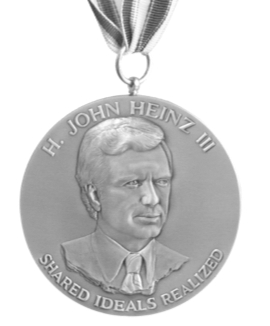
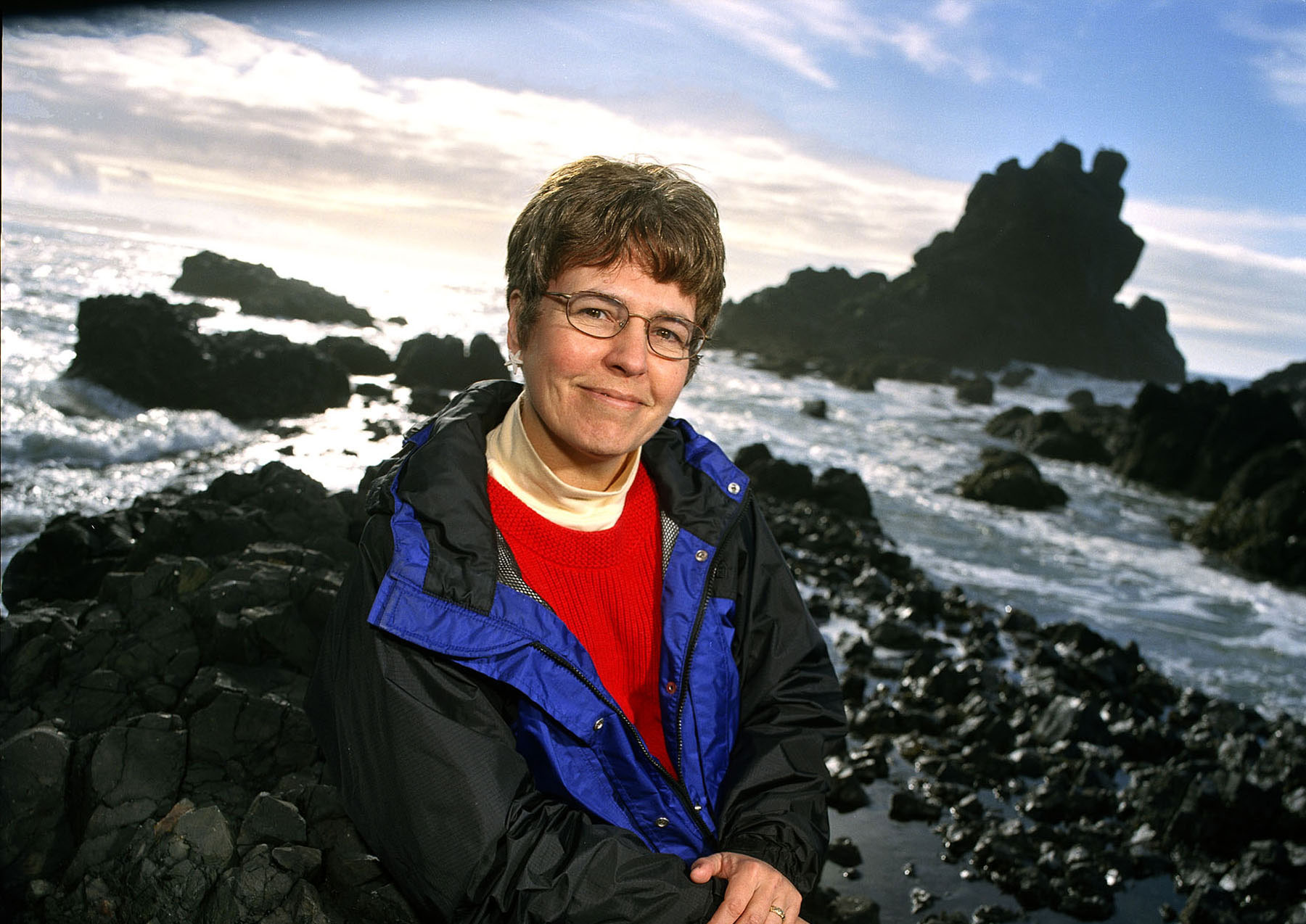
Jane Lubchenco receives the Heinz Award for the Environment for her role in broadening awareness of the importance of biological sustainability to the future of humanity, her efforts to raise the visibility of ocean issues, her commitment to opening the lines of communication between scientists and citizens, and her pioneering concept of the social contract that exists between science and society.

Based on a brilliant scientific career, and after years of dedicated service, Jane Lubchenco is one of our most respected and recognized ecologists. She has shown that, while science should be excellent, pure and dispassionate, scientists should not sacrifice their right - and must not ignore their responsibility - to communicate their knowledge about how the earth is changing or to say what they believe will be the likely consequences of different policy options.

In 21st-century America, a majority of scientists foresee drastic climate and ecological change. They postulate that an overproduction of greenhouse gases has increased the earth's surface temperature, and that this variation may lead to flooding, droughts and scarcity of resources. Dr. Jane Lubchenco was one of the first scientists to present this dilemma to policy makers and the public. A firm believer in the ability of science to improve the quality of human and ecological life, she has been a pioneer in the practice of creating environmental policy through the widest distribution of scientific research.

A professor of marine biology at Oregon State University since 1977, her research has added substantially to our knowledge and understanding of ocean communities. During the 1980s, she was a leader of the unprecedented dialogue within the research community, exploring a wide array of alternative scenarios regarding the future of environmental science. At a time when many ecologists were still content to concentrate on topics of purely intellectual interest, she urged that the relevance of ecological research to social problems be made more obvious.

At conferences and in papers, Dr. Lubchenco has pointed out the ominous and undeniable indications of the ways in which human activities have unintentionally caused shifts in environmental stability. Determined to turn these warnings into wake-up calls, she points out that global sustainability and long-term human survival may depend on people becoming better stewards of the ecosystems upon which all life depends.
Although her contributions to scientific knowledge are significant and ongoing, she is perhaps most widely recognized for her efforts to bridge the gap between scientists and society.

In her address as president of the American Association for the Advancement of Science in 1997, Dr. Lubchenco limned the intimate connections between ecological systems and human health, the economy, social justice and national security, and introduced the seminal concept of a "social contract" between scientists and society. That contract, she said, should express a commitment to harnessing the full power of science in discovering new knowledge, in communicating existing and new understanding to the public and policy makers, and in helping society move toward a more sustainable biosphere.

Jane Lubchenco has shown that the environment is not a partisan issue whose politics should divide us, but a shared legacy whose preservation must unite us. From the classroom to the newsroom to the Oval Office, she has proclaimed and exemplified her message of the importance of incorporating sound and clearly stated scientific ecological principles into responsibly enacted public policy.

Note: This profile is excerpted from the commemorative brochure published at the time of the awards' presentation.


UPDATES SINCE RECEIVING THE HEINZ AWARD  

February 2006 - Lubchenco receives the 2005 Public Understanding of Science and Technology Award from the American Association for the Advancement of Science "for her exemplary commitment to, and leadership of, public understanding of science initiatives in public policy and professional arenas." - American Advancement of Science website (www.aaas.org 

July 2005 - The world's businesses, both large and small, are dependent on services provided by steadily changing ecosystems, according to the report, "Ecosystems and Human Well-Being: Opportunities and Challenges for Business and Industry." Lubchenco co-authored the report under the Millennium Ecosystem Assessment (MEA). - MEA website (www.millenniumassessment.org)

November 2004 - Lubchenco is honored at the Environmental Law Institute annual awards dinner for having "demonstrated a lifetime of commitment to environmental protection and exemplary public service." - Environmental Law Institute website (www2.eli.org)  

April 2004 - Lubchenco wins the Distinguished Scientist Award from the American Institute of Biological Sciences. The award, which is "presented annually to individuals who have made significant contributions to the biological sciences", goes to Lubchenco for her research in and significant contributions to the areas of "marine biology, biodiversity, climate change, and environmental sustainability." - BioScience  

J
une 2003 - In affiliation with the Pew Oceans Commission, Lubchenco releases a public statement about the newest commission report "on the state of the oceans." The report addresses the problem of overfishing and provides a blueprint solution for "modernizing national ocean policy." - The Boston Globe  

September 2003 - Lubchenco is honored by the Scripps Institution of Oceanography with the 2003 Nierenberg Prize for Science in the Public Interest for her relentless determination to inform the public of the deteriorating conditions of our oceans and coasts. - The San Diego Union-Tribune  

February 2003 - Lubchenco serves as principal investigator for a study being conducted along the coasts of Washington, California and Oregon. The research is aimed at "revealing the inner workings of the near-shore marine environment." - AScribe Newswire  

January 2003 - Lubchenco receives a Distinguished Service Award from the Society for Conservation Biology. One of five awardees, this award goes to individuals "whose work has furthered the mission of the SCB." - Society for Conservation Biology website (www.conbio.org 

Speech

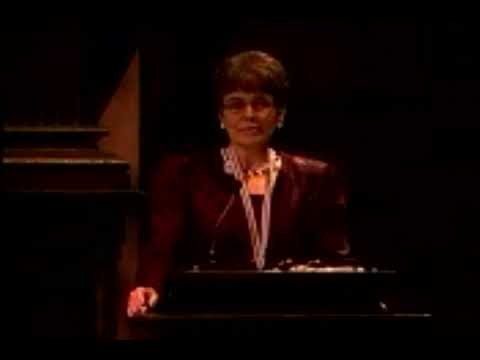
3/12/2002 - Acceptance Speech

Thank you Teresa so very, very much. This is a very deep and very special honor for me. The award is especially meaningfully because it honors John Heinz who like you clearly understood long before many others did the very intimate connection between the environment and human health, prosperity and well-being. His bipartisan efforts and his ability to think long term reflect the worldview that is all too rare today, but indeed urgently needed.

I am very grateful to the Heinz Family Foundation for shining your formidable spotlight not only on the environment but on the essential role of science in addressing environmental issues. In the end, the decisions we make about the environment will be based on moral and ethical values. But those decisions will be much better decisions if they are in fact formed by the best possible science.

I am equally pleased that this award has drawn attention to the Aldo Leopold Leadership Program, formed four years ago with funding from the David and Lucile Packard Foundation. The program trains outstanding academic, environmental scientists to be better communicators of science, the media, the public, the policy makers and the interested citizens. I have to let you in on a little secret. When we started the program, we were not at all sure that scientists, and the best scientists, would even apply to the program much less to be willing to invest two very intense weeks in learning new skills. Much to our delight, and more importantly to the benefit of the nation, we have been overwhelmed by applications from the most outstanding scientists. And I think are beginning to have new voices that can help address many of our serious issues. The program is clearly fulfilling a critical need. But I think it also indicates that there is a culture change that is happening within the academic community. A culture change that reflects the urgency of many of our environmental and other challenges and therefore the willingness of individuals to become more public and share what they know in new and different ways.

I am also grateful that this award highlights the plight of our oceans and the emergence of some powerful new solutions. Most Americans still believe that the oceans are so vast and bountiful that there is very little that we can do that would truly change them. The reality is that we are not just using oceans - we are using them up. If we truly want to be able to use them tomorrow, we have to do a better job of protecting them today. A powerful new tool that is emerging and that is being talked about much more seriously is that of a network of marine reserves - not unlike national parks or wilderness areas on land. A marine reserve is an area of the sea that is completely protected from extractive activities. They are also called "no take areas" - no fishing, no mining, no drilling, no dumping. These fully protected marine reserves have been shown quite definitely to be extremely powerful in protecting habitat in protecting biodiversity and protecting the essential services provide by marine ecosystems. And in some cases, they are also helping to replenishing depleted fisheries. At present, far less than one percent of U.S. water is fully protected. So we have some real opportunities to make a real difference with this new solution. The challenges in protecting oceans and ecosystems are formidable, but they are very important and essential to the very quality of our life. We need healthy ecosystems. They provide the goods and services of our earth's life-support system.

The events of 9/11 and the recent six-month anniversary have prompted Americans to reflect on our core values and to reaffirm our commitments that Teresa mentioned earlier. We have all been reminded of the importance of family. In addition, 9/11 has triggered a reassessment of national security and what that means. In all the talk about national security, I believe there are some core elements that have been missing - one of which is the focus on what I would call "natural security." Healthy ecosystems provide the natural security that is key to our health, prosperity and well-being. And indeed national security depends more intimately on natural security than we have appreciated.

I am very grateful to you, Teresa, and to the Heinz Family Foundation for highlighting the importance of the environment for today and tomorrow, and for bringing us into your family and for challenging us to carry on John's legacy.

Thank you all very much.
Jane Lubchenco